A flat tire can happen anytime—on the highway, in a parking lot, or even outside your home. Knowing how to put a spare tire on your car is an essential skill every driver should learn. Instead of waiting for roadside assistance, you can quickly replace the damaged tire yourself and continue your journey safely.
Below are 10 simple steps that will help you change your tire safely and efficiently.
1. Move Your Car to a Safe Location
The first thing you should do when you notice a flat tire is find a safe place to stop. Avoid stopping in the middle of the road or on a sharp turn where other drivers may not see you.
Try to move your car to a flat and stable surface, such as the side of the road or a parking lot. Turn on your hazard lights so other drivers know that your car is stopped due to an issue.
Safety should always be your top priority when dealing with a flat tire.
2. Apply the Parking Brake
Once your car is safely parked, engage the parking brake immediately. This prevents the car from rolling while you are changing the tire.
If you are on a slight slope, placing heavy objects or wheel wedges behind the tires can provide additional safety. This step might seem small, but it can prevent serious accidents.
Taking a few extra seconds to secure your vehicle ensures that you can work safely.
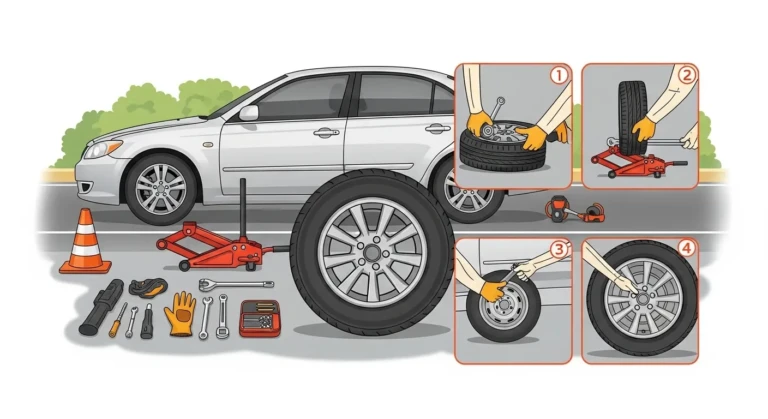
3. Take Out the Spare Tire and Tools
Most vehicles store the spare tire, jack, and lug wrench in the trunk or underneath the car. Remove all the tools before starting the process.
Check that the spare tire is properly inflated. A spare tire with low pressure will not help you reach your destination safely.
Keeping these tools organized nearby will make the tire replacement process faster and easier.
4. Remove the Hubcap or Wheel Cover
Some cars have a hubcap or wheel cover that hides the lug nuts. Before loosening the nuts, remove the hubcap using a flat tool or the end of the lug wrench.
Be careful while removing it so you do not damage the cover. Place it somewhere safe so you can reinstall it later.
Once the hubcap is removed, you will see the lug nuts that hold the wheel in place.
5. Loosen the Lug Nuts
Use the lug wrench to loosen the lug nuts on the flat tire. Turn the wrench counterclockwise to loosen them.
Do not remove the nuts completely at this stage—just loosen them enough so they can be removed easily later.
Sometimes the nuts can be tight, so you may need to use your body weight for extra leverage.
6. Lift the Car with the Jack
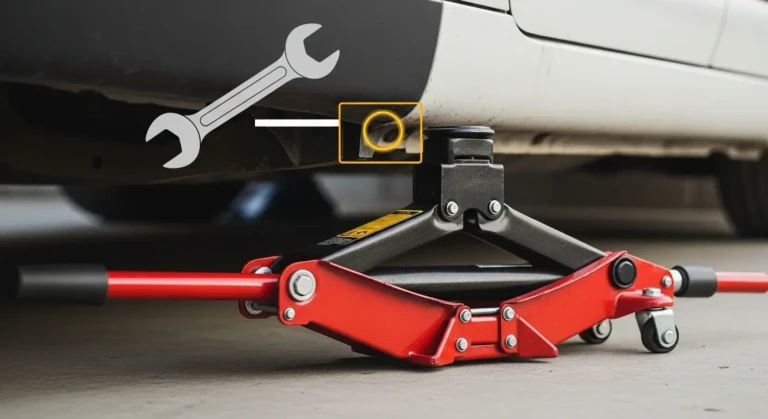
Now place the car jack under the vehicle’s designated lifting point. These points are usually mentioned in your car’s owner manual.
Slowly raise the car until the flat tire is about 5–6 inches above the ground. Make sure the car is stable before moving to the next step.
Never place your hands or body under the car while it is supported only by the jack.
7. Remove the Lug Nuts Completely
Once the car is lifted, finish removing the loosened lug nuts. Keep them together in a small container or pocket so they do not roll away.
This step is simple but important because losing a lug nut can make reinstalling the tire difficult.
After removing the nuts, the flat tire should be ready to come off.
8. Remove the Flat Tire
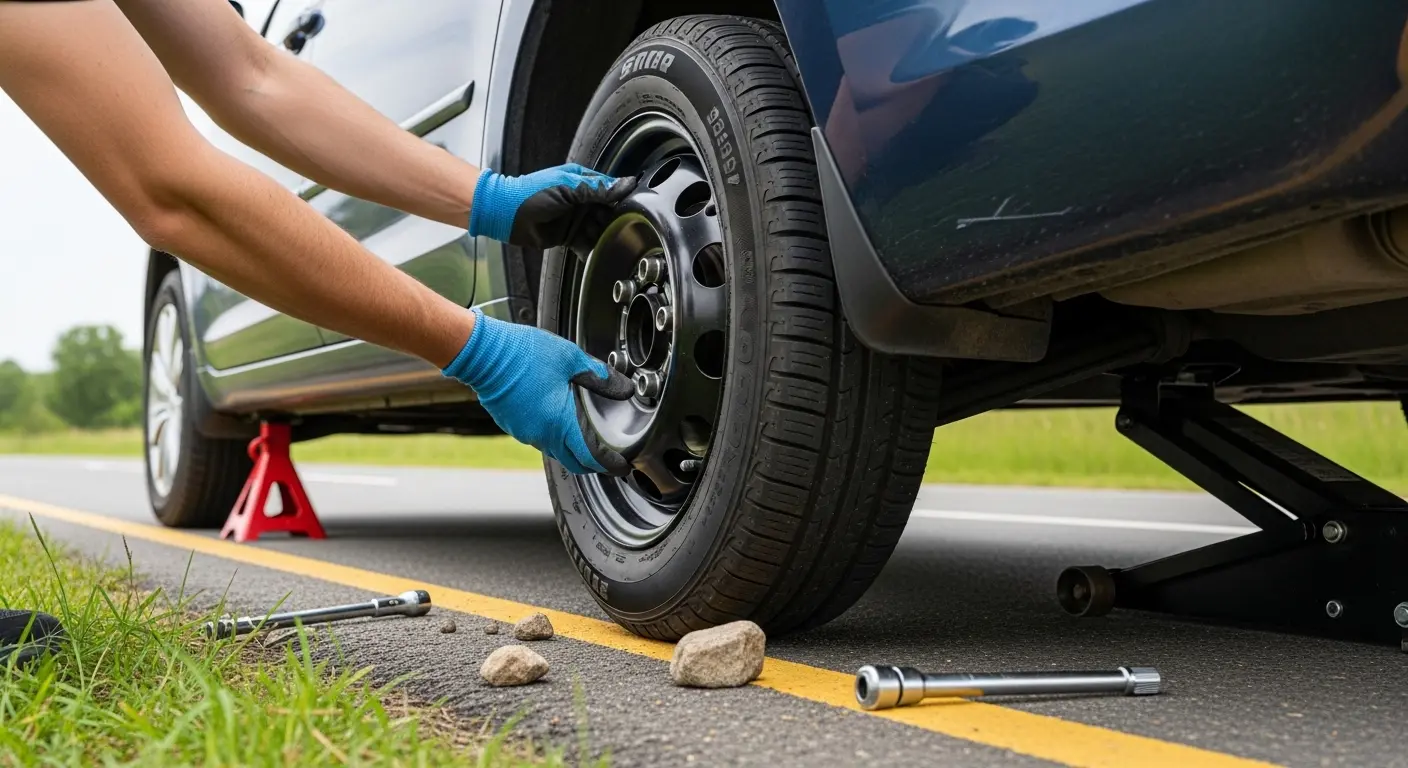
Grip the tire with both hands and pull it straight toward you. The wheel should slide off the hub easily.
Place the flat tire on the ground near your work area. Avoid placing it in the road where vehicles could run over it.
Removing the damaged tire clears the space for installing the spare one.
9. Mount the Spare Tire
Now lift the spare tire and align it with the wheel bolts. Carefully slide it onto the hub until it sits firmly in place.
After that, place the lug nuts back onto the bolts and tighten them by hand first. This ensures the tire is properly aligned.
Do not fully tighten them yet because the car is still lifted.
10. Lower the Car and Tighten the Lug Nuts
Slowly lower the car using the jack until the spare tire touches the ground. Once the car is stable, use the lug wrench to tighten the nuts fully.
Tighten them in a star pattern (cross order) to ensure the tire is evenly secured. This helps prevent wobbling while driving.
Finally, store your tools and the flat tire back in the trunk.
Final Thoughts
Learning how to put a spare tire on your car can save you time, money, and stress when you experience a flat tire. With the right tools and the steps above, most drivers can replace a tire in 15–20 minutes.
It is also a good idea to check your spare tire regularly and make sure your jack and tools are always in the vehicle. Being prepared ensures you can handle unexpected situations on the road with confidence.